What Percent of Parents Find Out the Gender of Their Baby
Do Americans Want to Be Surprised by the Sex of Their Baby?
Age, religiosity, parental condition impact views nearly finding out sex of a infant
GALLUP NEWS SERVICE
PRINCETON, NJ -- If y'all constitute out that you were having a baby, would you want to know whether it was a male child or girl before information technology was built-in, or would you lot want to await until nascency to find out? That may be a difficult question to reply, and one that many couples have to answer when they discover they are having a child.
A recent Gallup Console poll finds the public roughly divided as to whether or not they would desire to know the sex of their baby beforehand. More than half dozen in 10 18- to 34-yr-old Americans and women under historic period 50 say they would like to find out the infant's sex activity before it is born. A bulk of parents with young children would also like to observe out earlier birth. By comparing, most older Americans (anile 50 and older), as well as Catholics and Americans who frequently attend religious services would prefer to exist surprised.
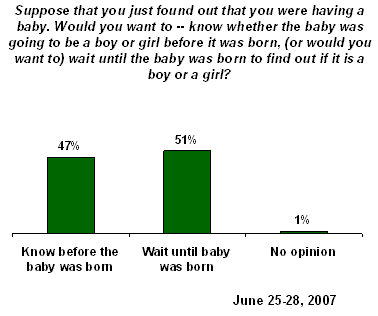
The June 25-28, 2007, Gallup Panel poll asked Americans to respond a hypothetical question well-nigh learning the sex of their child if they "but constitute out" that they were having a baby. The public is substantially divided in its views -- 51% of Americans say they would wait until the baby is born, while 47% say they would like to know beforehand.
Bulk of Younger Americans Want to Know Sex Before Babe Is Born
Roughly two in three younger adults, and virtually women under historic period 50, tell Gallup that they would similar to know whether they are having a male child or a girl before the baby is born.
| Preference in Learning Gender of Unborn Baby by Gender and Historic period | ||
| Know earlier the baby was born | Look until the baby was born | |
| % | % | |
| Gender | ||
| Men | 45 | 54 |
| Women | 49 | 49 |
| Age | ||
| 18- to 34-twelvemonth-olds | 66 | 34 |
| 35- to 49-year-olds | 48 | 51 |
| 50 years old and older | 32 | 65 |
| Gender/Age | ||
| Men, aged 18-49 | 54 | 45 |
| Men, 50 years old and older | 31 | 66 |
| Women, anile eighteen-49 | 61 | 39 |
| Women, 50 years old and older | 33 | 64 |
Both men and women are roughly divided in their preference for learning the sexual activity of a infant earlier it is born or waiting until later on it is born.
Sixty-six pct of Americans between the ages of xviii and 34 say they would like to know whether they are having a boy or a daughter before the baby is born. This compares with 48% of those between the ages of 35 and 49, and just 32% of those aged 50 and older. These historic period variations may be due to the fact that identifying a baby's sex in utero was not an choice when well-nigh older Americans had children -- the technology only didn't exist.
Among the diverse age-by-gender groups, 61% of women under age 50 say they would like to know the infant'south sex before nascence, slightly higher than the 54% of men in this age group. The majority of both men and women aged 50 and older adopt waiting until the baby is born to find out whether the babe is a boy or a girl.
More than 6 in 10 Catholics Adopt the Surprise
Religion is also related to Americans' views about finding out the sex of a baby earlier it is born.
A solid bulk of Catholics, 63%, say they would want to await until the baby'south nativity to discover out whether it is a boy or a daughter, while 36% would like to know before so. Protestants, past comparison, are roughly divided -- 51% prefer to wait, while 48% prefer to observe out before birth. A majority (57%) of those with no religious amalgamation would desire to notice out the sex of the baby earlier birth.
A majority of Americans who nourish religious services at least monthly say they would wait until the infant is born to detect out its gender. Among those who seldom or never go to church, there is a slight preference for learning the infant'south sex earlier it is born.
| Preference in Learning Gender of Unborn Infant | ||
| Know earlier the baby was born | Await until the baby was built-in | |
| % | % | |
| Religious Preference | ||
| Protestant | 48 | 51 |
| Catholic | 36 | 63 |
| No religion | 57 | 41 |
| Church Attendance | ||
| At least monthly | 42 | 56 |
| Seldom/never | 52 | 46 |
Parents of Immature Children Want to Know Baby's Gender Before Nascency
Parents of young children are much more than likely than those who are not to say that they want to know the baby'due south sex before information technology is born.
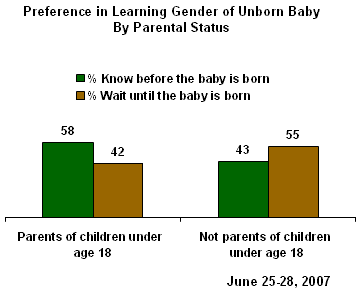
Fifty-eight per centum of parents of children nether age 18 say they would like to know the sex of the infant before information technology is born, while 42% would prefer to wait. The results are essentially the contrary among those who are not parents of children this age -- 55% would prefer to wait, 43% would like to know earlier.
Survey Results
Results for this panel report are based on phone interviews with 1,014 national adults, aged eighteen and older, conducted June 25-28, 2007. Respondents were drawn from Gallup's household console, which was originally recruited through random selection methods. The final sample is weighted then it is representative of U.S. adults nationwide. For results based on the total sample of national adults, i tin can say with 95% confidence that the maximum margin of sampling error is ±4 percent points. In addition to sampling error, question wording and applied difficulties in conducting surveys can introduce error or bias into the findings of public opinion polls.
What Percent of Parents Find Out the Gender of Their Baby
Source: https://news.gallup.com/poll/28180/americans-want-surprised-sex-their-baby.aspx

Postar um comentário for "What Percent of Parents Find Out the Gender of Their Baby"